Six Hours a Day for Water: The Story of Ms. Bùi Thị Mượt in Phú Thọ
2939
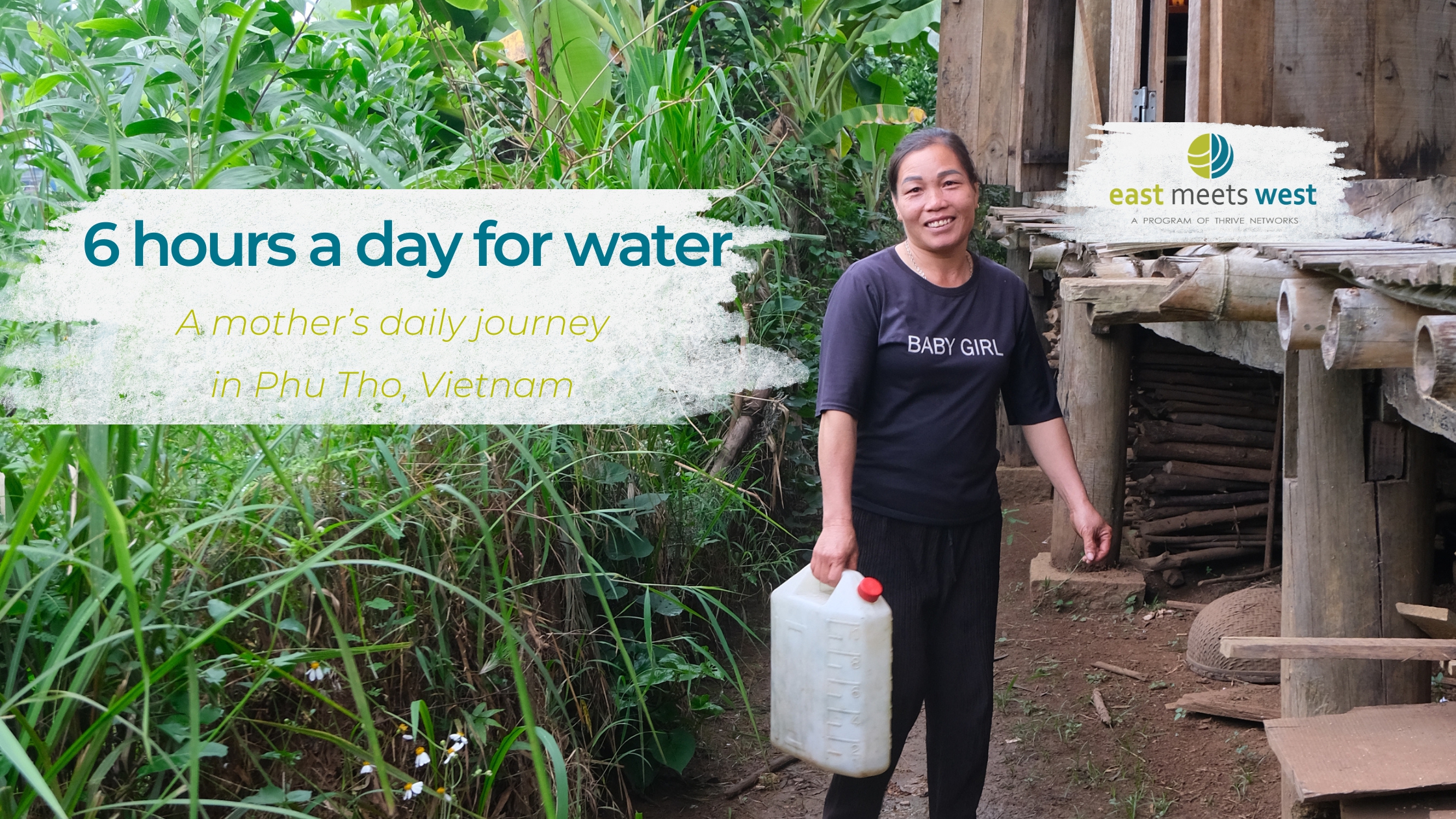
One afternoon in late October 2025, Ms. Bùi Thị Mượt once again began her familiar journey — walking nearly two kilometers into the mountain stream to collect water.
Each trip, she carries home 10 liters. Every day, she makes two to three trips. Each trip takes about two hours.
On some days, she spends up to six hours just fetching water for her family.
For Ms. Mượt, this is nothing unusual — it has been her daily reality for many years.
Living in Chông Vạch Hamlet, Tân Lạc Commune, Phú Thọ Province, her family of three is classified as a poor household. Her husband passed away seven years ago from a stroke when their youngest child was just 20 days old. Since then, she has single-handedly raised her two children and provided for the family.
The family owns about 400 square meters of rice field and 5,000 square meters of acacia plantation. With support from the local Women’s Union, she received a cow, which gave birth after one year, providing the family with a small but stable source of livelihood.
However, access to safe water remains a constant concern.
Water for washing is diverted from a nearby spring. Drinking water must be collected from a mountain stream using plastic containers. The water contains high levels of limestone, evidenced by thick white residue accumulating inside kettles. Although water is available year-round, its quality does not ensure safe long-term use.
The family does not yet have an adequate sanitation facility. During the rainy season (July–August), the area is prone to flooding. In winter, their simple and exposed house becomes even colder.
Her youngest son, now seven years old, is in second grade at a school two kilometers away. As there is no boarding option, she walks him to and from school four times a day. The hours spent fetching water further reduce the limited time she has for income-generating work and childcare.
When asked to choose between two possible support options — a hygienic latrine or a water filtration system — she responded immediately:
“I would choose the water filter. Then I wouldn’t have to fetch water every day, and I would have more time to work.”
Ms. Mượt is one of 17,833 direct beneficiaries of the project Women-led Inclusive Climate Resilient (WICR) WASH Vietnam project, implemented by East Meets West Foundation (EMWF) with funding support from the JTI Foundation.
The project is being implemented in Phú Thọ and Thanh Hóa provinces during the period 2025–2026, with key partners including the Thanh Hóa Provincial Centre for Rural Water Supply and Sanitation, the Thanh Hóa Provincial Women’s Union, and the Phú Thọ Provincial Women’s Union.
Through the project, households like Ms. Mượt’s will gain access to hygienic latrines and locally appropriate safe water solutions, helping to reduce the time burden on women while improving health outcomes for the entire family.
For Ms. Mượt, this is not simply about infrastructure or equipment. It means gaining a few extra hours each day — time to work, to care for her children, and to prepare for a more secure future.
Behind the statistics on water and sanitation are the quiet hours of labor carried by women like her — women who safeguard their families’ health and resilience through persistence every single day.
Investing in water and sanitation is not merely about building facilities. It is about restoring time, health, and opportunity to women — the central pillars of sustainable community development.